




login
register
中文
History
search

Contact US
- Baking & Non-baking enzymes
- Baking enzymes
- Flour improvement enzymes
- Non-baking enzymes
- Juice, Wine and Plant Extract
- Fruit and vegetable enzymes
- Plant extract enzymes
- Wine enzymes
- Coffee processing enzymes
- Tobacco enzymes
- Starch and Grain Processing
- Starch
- Starch sugar
- Brewing
- Fermentation
- Ethanol/Portable Alcohol
- Animal & Vegetable Protein
- Animal protein
- Vegetable protein
- Transglutaminase
- Egg, Meat and Dairy

- Livestock & Poultry
- All animals
- Poultry enzymes
- Pig/Swine enzymes
- Ruminant
- Cattle
- Dairy cow
- Aquaculture
- Feed single enzyme
- NSPase
- Glucose oxidase
- Lysozyme
- Protease
- Lipase
- Alpha-amylase
- Phytase
- More >
- Fermented feed
- Feed ensilage
- Textile enzymes
- Bioscouring
- Denim washing
- Biopolishing
- Bleach cleanup
- Desizing & sizing
- Detergent enzymes
- Enzyme blend
- Individual enzymes
- Pulp & Paper
- Pulping
- Deposit control
- Starch modification
- Bleaching
- Leather
- Soaking
- Liming
- Degreasing
- Bating
- New applications
- Food new applications
- Waster water treatment
- Agriculture
- Oil drilling


detail
Company news
Industry news
Media news
The importance of Fungal Amylase in Baking - Improving Texture, Shelf Life, and Flour Quality
Fungal amylase is a type of enzyme that breaks down starch into simple sugars, such as glucose and maltose. In baking, it is particularly useful as it can break down the starches in flour, which helps to improve the texture, volume, and consistency of baked goods.
Fungal amylase is commonly used in baking for the following purposes:
Improve dough handling and fermentation: Fungal amylase can break down the long, complex chains of starch molecules in flour into simpler sugars, which yeast or other microorganisms can use as a nutrition source. This helps to improve the dough's handling properties, promote faster fermentation, and enhance the flavor and aroma of the final product.
Enhance shelf life: Fungal amylase can also improve the shelf life of baked goods by reducing the amount of starch that remains in the finished product. This helps to prevent staling and maintain the texture and freshness of the product for a longer period.
Standardize flour quality: Fungal amylase can be used as a tool for wheat flour standardization, helping to ensure consistent baking performance across different batches and varieties of flour. By measuring the enzyme activity of different flours and adjusting the amount of added fungal amylase accordingly, bakers can achieve better control over the final product's characteristics, such as the crumb structure, crust color, and flavor.
Sunson
is able to prove the performance of fungal amylase by its own well formulated
baking fungal amylase to improve dough handling, fermentation, shelf life, and
flour quality. The product makes it a crucial tool in the baker's arsenal,
allowing for higher-quality, more consistent, and inviting baked goods.
prev
next

Invitation for Joint Innovation with Sunson
An invitation for all enzyme-related parties to join Sunson for the innovation in new enzyme, new application, new segment and new market.

Sunson & ECNU Patent Breakthrough: Engineered Thermostable Pepsin for High-Temp Feed & Food Processing
Sunson and East China Normal University secure a patent for highly thermostable pepsin. This engineered heat-resistant enzyme boosts efficiency in feed pelleting and food processing.

Discover the Future of Baking Enzymes with Sunson at the 28th China International Baking Exhibition!
Meet Sunson at the 28th China International Baking Exhibition (CIBE 2026) in Shanghai. Visit Booth 82H03 (Hall 8.2) from May 20-23 to explore innovative enzyme solutions for bread, biscuits, and noodles. Live demos & expert consulting!

Sunson Visited by Yinchuan Economic Zone Leaders
Yinchuan Economic Development Zone leaders visit Sunson to discuss biotech innovation, enzyme production, and foreign trade expansion. Explore Sunson's 30-year legacy and global growth strategy.
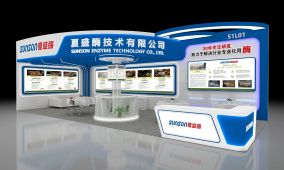
Sunson Enzyme shines at FIC 2026
Sunson Enzyme showcases its core enzyme preparation products and technical solutions at the 29th China International Food Additives and Ingredients Exhibition (FIC) in Shanghai.

Invitation to visit Sunson at FIC2026
We sincerely invite you to visit our booth at the 29th China International Food Additives and Ingredients Exhibition (FIC 2026).

Sunson to Exhibit at FeedVetGrain Expo 2025
Sunson will present its full portfolio of science-driven feed enzyme solutions at FeedVetGrain Expo 2025

Meet Sunson at in-cosmetics™ Asia 2025 (Booth G65)
Sunson will participate in-cosmetics™ Asia 2025 with its products for oral-care and cosmetics
Sunson Industry Group Co., Ltd.
Address: Room 1404 (15A04), Building 2, Beichenxinjiyuan, No. 13A, Beiyuan Road, Chaoyang District, Beijing, China
Phone:+86 10 84921916; Mobile: +86 18310169953 (Skype or Wechat)
E-mail:enquiry@sunsonzymes.com
For WeChat Connetion
links:


