




login
register
中文
History
search

Contact US
- Baking & Non-baking enzymes
- Baking enzymes
- Flour improvement enzymes
- Non-baking enzymes
- Juice, Wine and Plant Extract
- Fruit and vegetable enzymes
- Plant extract enzymes
- Wine enzymes
- Coffee processing enzymes
- Tobacco enzymes
- Starch and Grain Processing
- Starch
- Starch sugar
- Brewing
- Fermentation
- Ethanol/Portable Alcohol
- Animal & Vegetable Protein
- Animal protein
- Vegetable protein
- Transglutaminase
- Egg, Meat and Dairy


- Livestock & Poultry
- All animals
- Poultry enzymes
- Pig/Swine enzymes
- Ruminant
- Cattle
- Dairy cow
- Aquaculture
- Feed single enzyme
- NSPase
- Glucose oxidase
- Lysozyme
- Protease
- Lipase
- Alpha-amylase
- Phytase
- More >
- Fermented feed
- Feed ensilage
- Textile enzymes
- Bioscouring
- Denim washing
- Biopolishing
- Bleach cleanup
- Desizing & sizing
- Detergent enzymes
- Enzyme blend
- Individual enzymes
- Pulp & Paper
- Pulping
- Deposit control
- Starch modification
- Bleaching
- Leather
- Soaking
- Liming
- Degreasing
- Bating
- New applications
- Food new applications
- Waster water treatment
- Agriculture
- Oil drilling


detail
Company news
Industry news
Media news
Enzymes revolutionize Pulp and Paper Industry
Enzymes have
become an integral part of the pulp and paper industry, offering a range of
benefits that help reduce the environmental impact of the manufacturing process
while improving the quality of the end product. There are several enzymes used
in the industry, each with its own unique benefits.
Cellulase is
used in the pulp and paper industry to improve the efficiency of the
pulp-making process. By modifying cellulose fibers in different ways, cellulase
enzymes reduce the energy required to pulp the wood, resulting in significant
cost savings. Additionally, the use of cellulase enzymes reduces the amount of
chemical pulping agents required, thereby reducing the environmental impact of
the manufacturing process. Cellulases are also used for drainage, deinking, and
fiber modification, making it easier to recycle paper and reduce the number of
trees needed for paper production.
Xylanase is an enzyme used to reduce the consumption of chlorine dioxide in the bleaching process, thereby reducing the amount of chemicals used and the associated costs. It has also been found to reduce AOX discharges by 5-20%, depending on the type of pulping process used. Lipases are used to control deposits of pitch, while cellulases improve the rates of dewatering of pulp and pectinases are used to digest pectins.
Peroxidase
enzymes are used in the pulp and paper industry to improve the quality of the
end product. Laccase helps with delignification of pulp, which can replace
current bleaching chemicals such as oxygen or ozone. Catalase is used to
convert residual hydrogen peroxide to water and oxygen, making the effluent
ecologically harmless.
Enzymatic
modification of fiber improves the surface and creates new fiber
characteristics, making it easier to run the pulping, bleaching, and
papermaking processes. Cellulase and hemicellulase enzymes are mixed with the
paper pulp, hydrolyzing surface sugars in a controlled manner and releasing ink
particles bound to the fiber. This eliminates the need for subsequent bleaching
with hydrogen peroxide and reduces the environmental impact of the
manufacturing process.
Enzymes have
revolutionized the pulp and paper industry, offering a range of benefits that
help reduce the environmental impact of the manufacturing process while
improving the quality of the end product. The use of enzymes has become an
integral part of the industry, and their importance is only set to grow in the
coming years.
Sunson’s
pulp & paper solution is able to reduce energy and water consumption,
minimize the use of harmful chemicals, and enhance paper machine efficiency and
quality. We seek to collaborate with industry players and customers to
constantly develop new sustainable biological solutions to further improve the
sustainability of the industry.
prev
next
Invitation for Joint Innovation with Sunson
An invitation for all enzyme-related parties to join Sunson for the innovation in new enzyme, new application, new segment and new market.
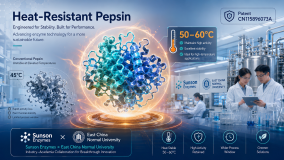
Sunson & ECNU Patent Breakthrough: Engineered Thermostable Pepsin for High-Temp Feed & Food Processing
Sunson and East China Normal University secure a patent for highly thermostable pepsin. This engineered heat-resistant enzyme boosts efficiency in feed pelleting and food processing.

Discover the Future of Baking Enzymes with Sunson at the 28th China International Baking Exhibition!
Meet Sunson at the 28th China International Baking Exhibition (CIBE 2026) in Shanghai. Visit Booth 82H03 (Hall 8.2) from May 20-23 to explore innovative enzyme solutions for bread, biscuits, and noodles. Live demos & expert consulting!
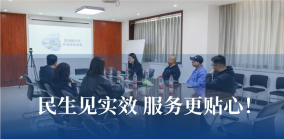
Sunson Visited by Yinchuan Economic Zone Leaders
Yinchuan Economic Development Zone leaders visit Sunson to discuss biotech innovation, enzyme production, and foreign trade expansion. Explore Sunson's 30-year legacy and global growth strategy.
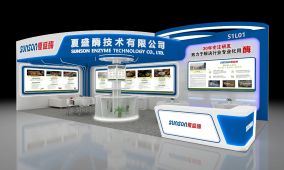
Sunson Enzyme shines at FIC 2026
Sunson Enzyme showcases its core enzyme preparation products and technical solutions at the 29th China International Food Additives and Ingredients Exhibition (FIC) in Shanghai.

Invitation to visit Sunson at FIC2026
We sincerely invite you to visit our booth at the 29th China International Food Additives and Ingredients Exhibition (FIC 2026).

Sunson to Exhibit at FeedVetGrain Expo 2025
Sunson will present its full portfolio of science-driven feed enzyme solutions at FeedVetGrain Expo 2025

Meet Sunson at in-cosmetics™ Asia 2025 (Booth G65)
Sunson will participate in-cosmetics™ Asia 2025 with its products for oral-care and cosmetics
Sunson Industry Group Co., Ltd.
Address: Room 1404 (15A04), Building 2, Beichenxinjiyuan, No. 13A, Beiyuan Road, Chaoyang District, Beijing, China
Phone:+86 10 84921916; Mobile: +86 18310169953 (Skype or Wechat)
E-mail:enquiry@sunsonzymes.com
For WeChat Connetion
links:


